Complex logic, without complex configuration.
Build responsive audiovisual experiences in a visual graph, or describe what you want and let your own AI agent configure it for you.
What can be built in Skapes?
Almost anything related to audiovisual experiences, but here are a few examples.
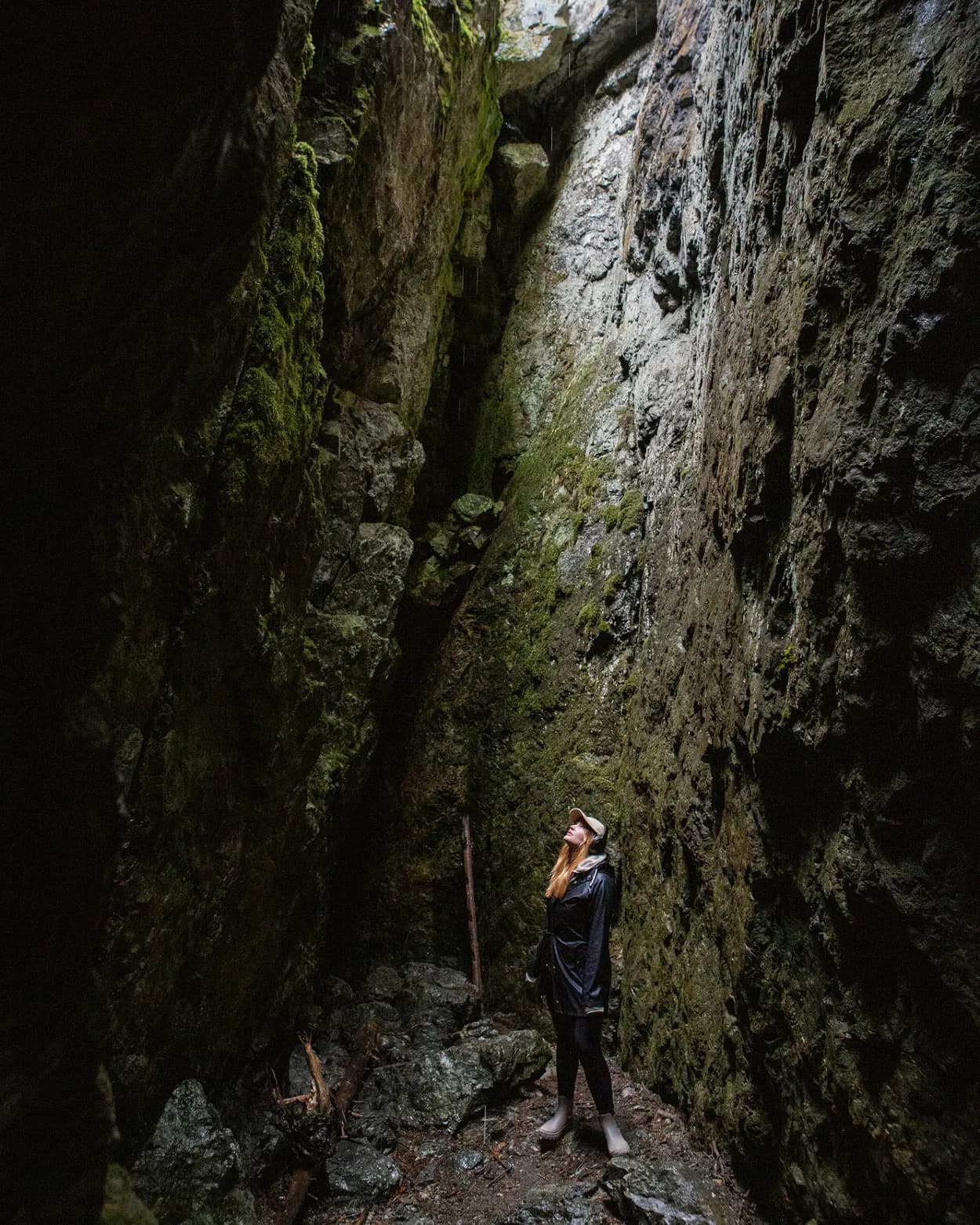
GPS-based experiences. Multi-stem music playing in exact sync, where each layer comes forward or fades away as you move through the landscape.
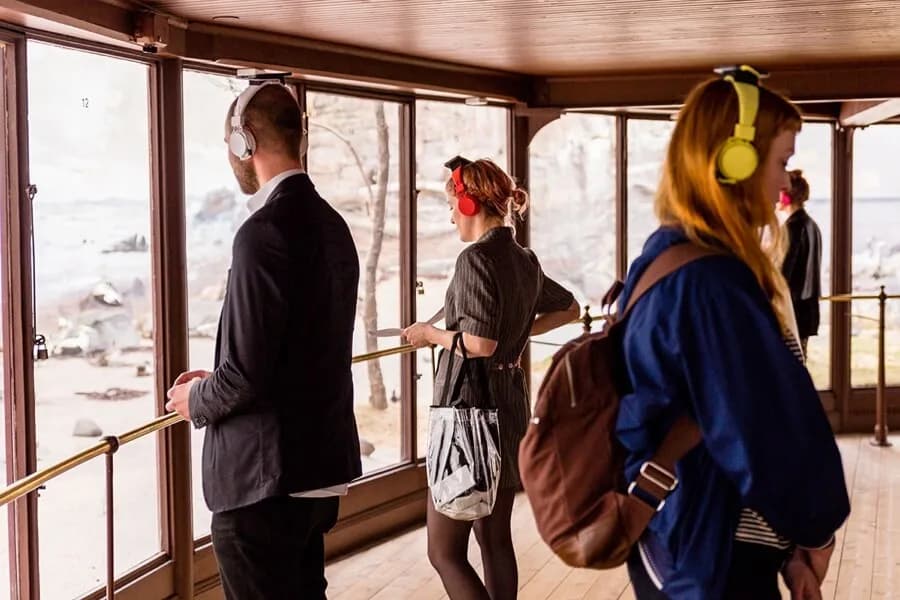
Indoor museum experiences. Indoor positioning follows exact movement and head direction — so a bird can explain how it feels to have been sitting there for 100 years, just as you look at it.

City walks. Stories, music and voices tied to streets and squares, unfolding at the pace of whoever is walking.
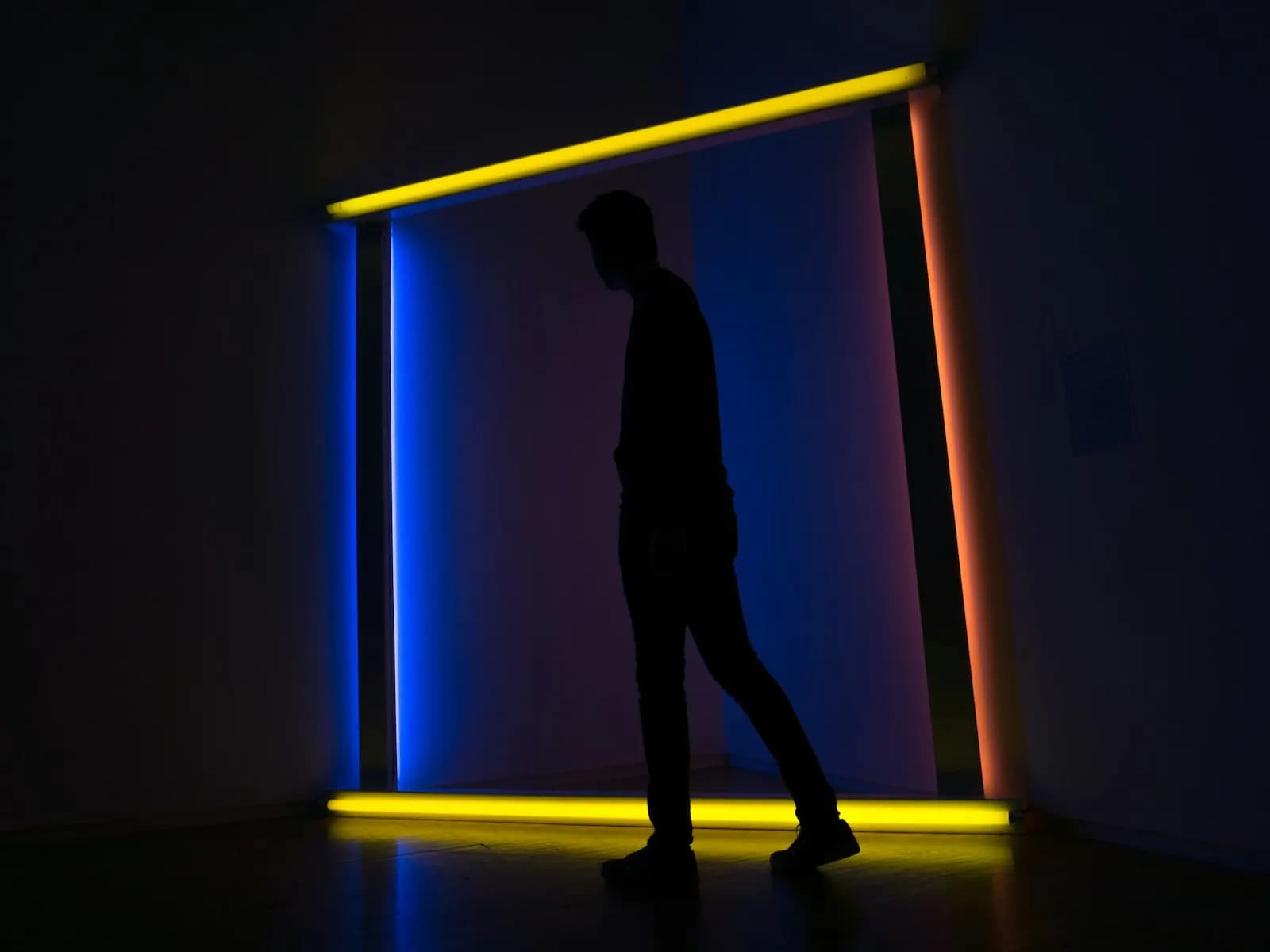
Audiovisual environments. Light controlled through DMX signals shapes a room, and changes with visitors' movement and interactions.
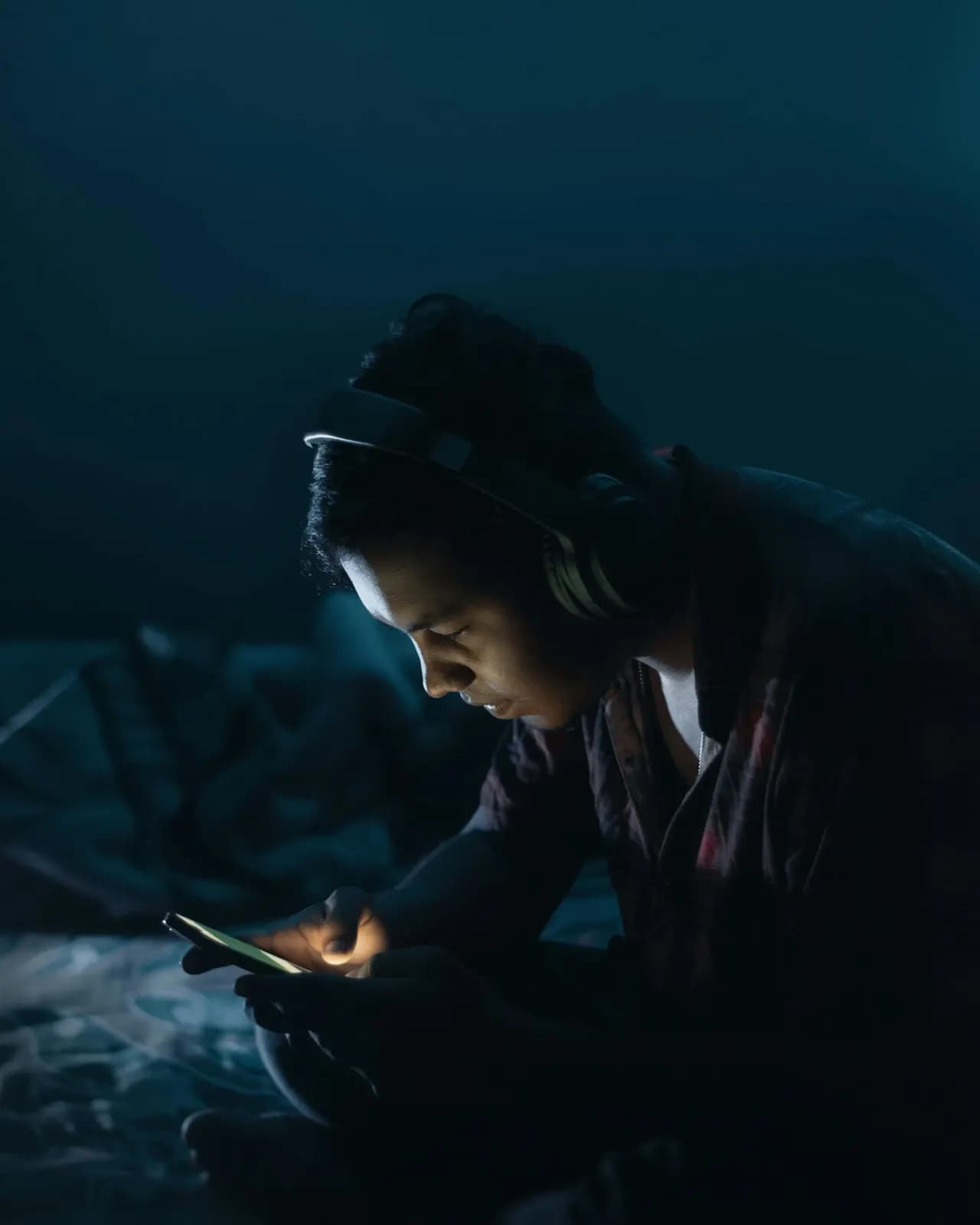
AI conversations. Someone on their own, at home, can talk with the experience and let the conversation shape what happens next.
Experiences can respond to…
Visitor movement. Let the experience respond to where you go and how you move, outdoors with GPS or indoors with exact positioning.
Places and zones. Draw points, paths and zones on the map and respond to how close someone is to each of them.
Head direction. Know which way someone is facing, so sound can stay anchored in the room as they turn.
Other visitors. Count who is where, live, and let a place change character as it fills up or empties.
Painted maps. Paint an image over the map and let the brightness under each visitor set a volume or an intensity.
Changing surroundings. Let weather, temperature or other conditions shape the experience.
Time and date. Let the experience respond to the hour, day, date, or season.
Sound itself. Analyse a microphone or a track and let its loudness or frequencies drive something else.
Incoming signals. Receive OSC messages from sensors, show control and other systems on site.
What someone says. Let an answer, a question or a wish in a conversation with an AI character decide what happens next.
Taps and choices. Let a button or a choice on the visitor's screen set something the rest of the experience responds to.
The journey so far. Respond to where someone has been and what they've already experienced.
Which in turn controls…
Layers of sound. Blend between perfectly synchronized audio stems, bringing individual layers forward or letting them fade away.
Spatial audio. Give sound a position, direction and distance around the listener.
Live audio. Bring sound in from a microphone, performer, or other live source, in real time.
Live streams. Play a low-latency stream to everyone at once, and pick out its individual audio or video tracks.
Light and atmosphere. Set colour and intensity on connected fixtures, channel by channel over DMX.
Connected devices. Send OSC to media servers, installations and other external systems.
AI conversation. Let an AI character speak and reply in real time, with a prompt the experience itself can rewrite.
Screens. Switch, blend or transform images and video in response to what's happening.
The visitor's app. Design the screens visitors see on their phone, and move between them as the experience unfolds.
And in between.
Conditions. Combine signals with if, and, or, not and comparisons, wired together visually.
Maths and remapping. Turn a distance into a volume or a temperature into a colour by remapping one range onto another.
Transitions. Nothing has to jump. Any change can ease in over seconds or minutes.
Delays. Hold a signal back, so one thing happens a moment after another.
Expressions. Write a short formula wherever wiring nodes together would be more than the idea deserves.
Versioned building blocks. Every node is versioned, so a published experience keeps behaving the way it did when you tested it.
What is the product?
Here’s a selection of what Skapes is.
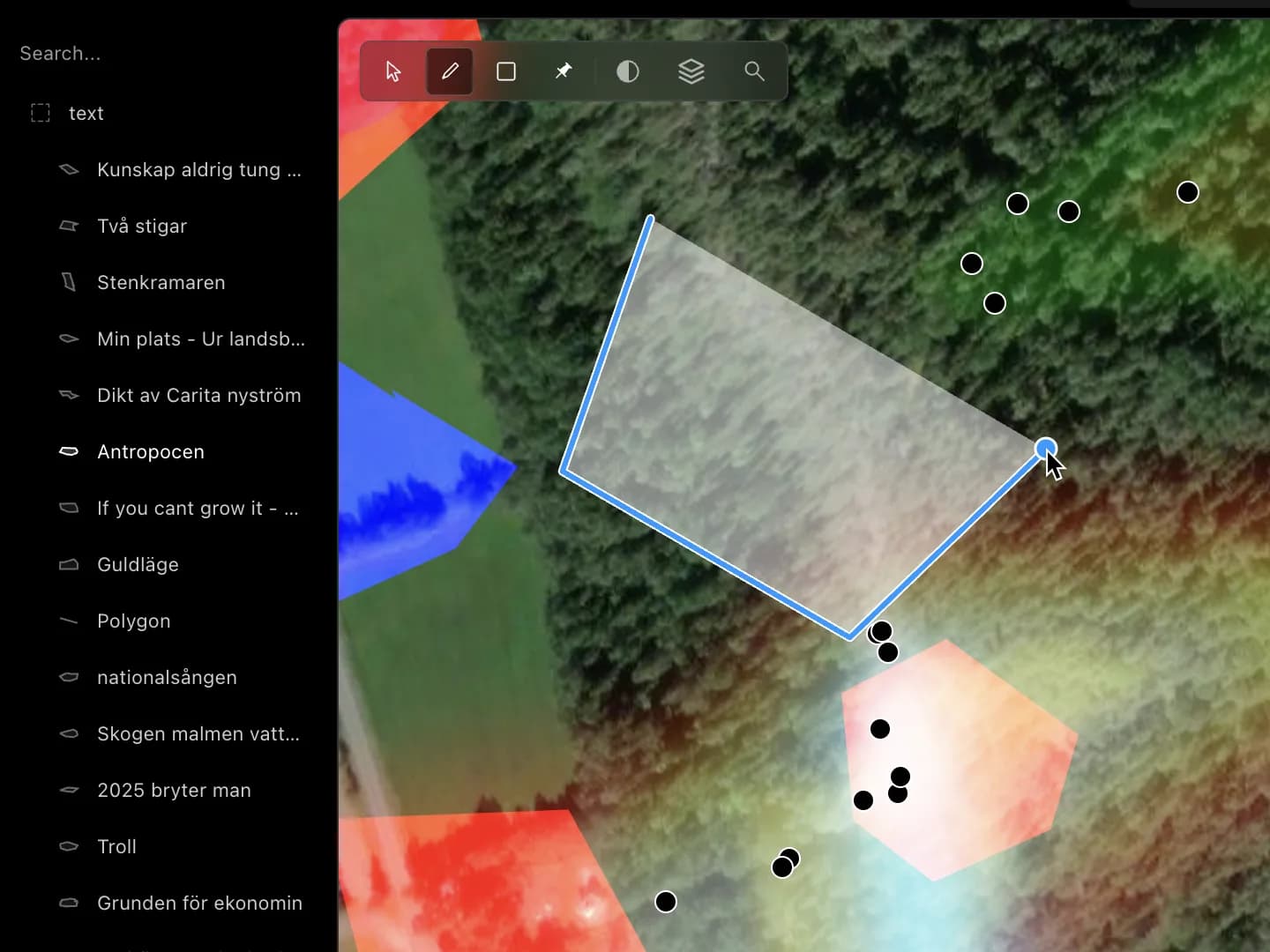
A map canvas. Draw zones, paths and points straight onto the place, paint image overlays, and bring in routes recorded on site.
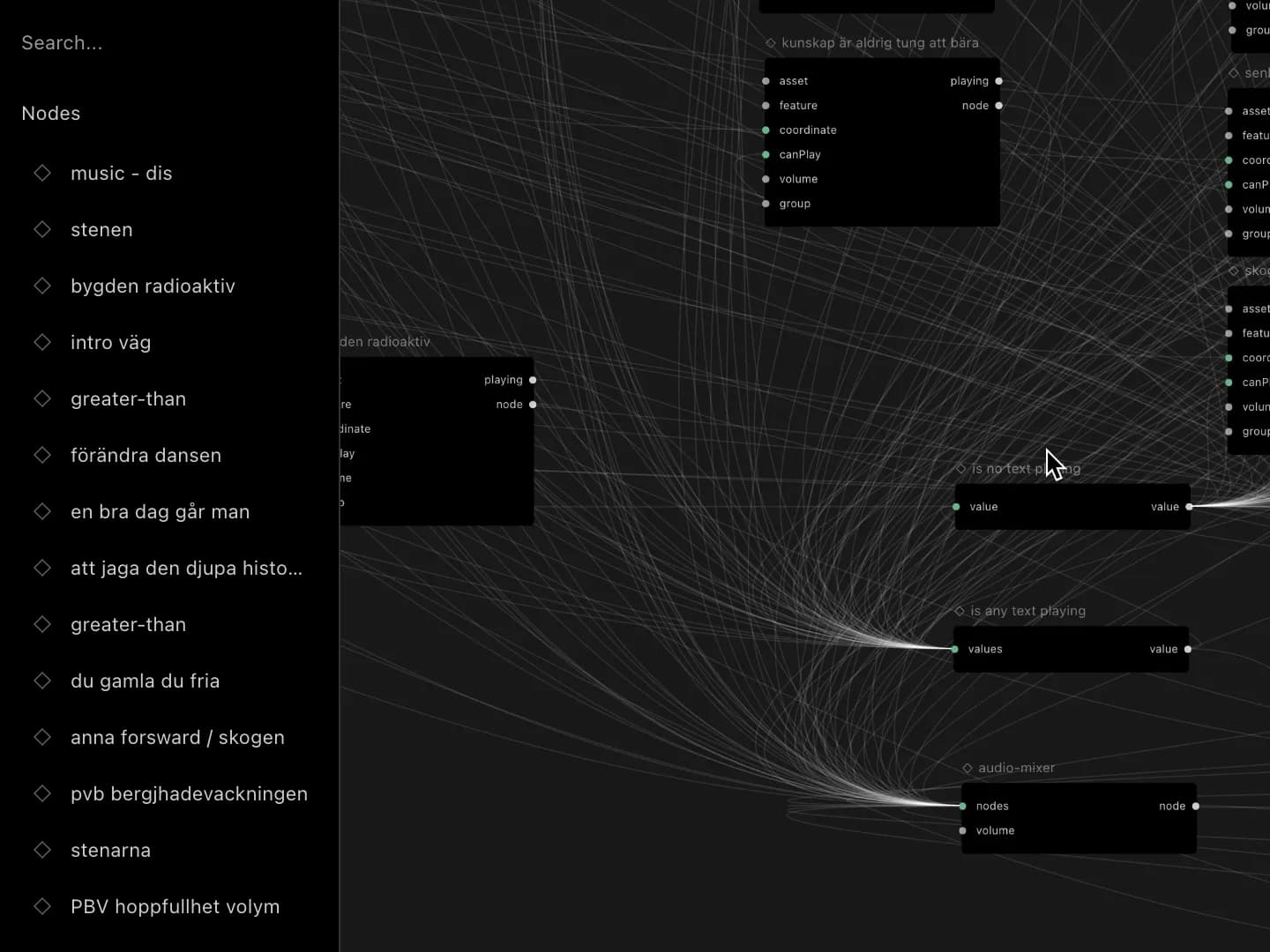
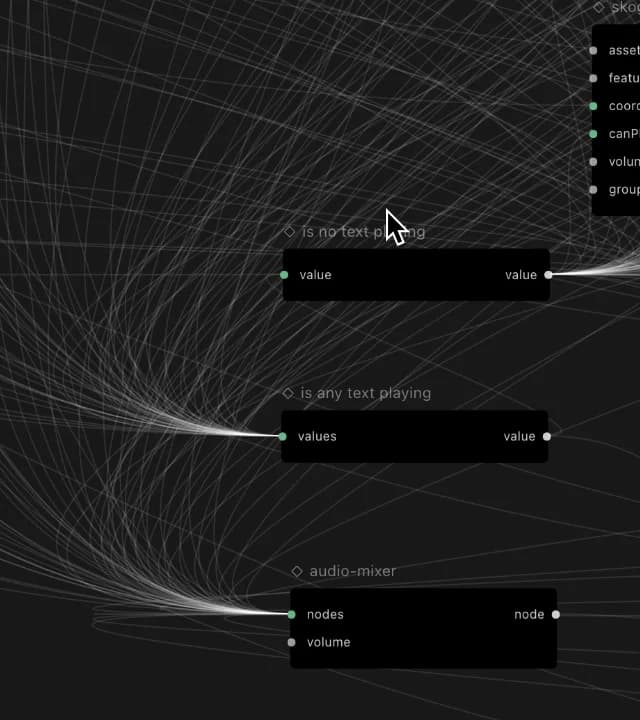
A node canvas. Connect anything to anything and set exact behaviours, with live values running through the graph as you work.
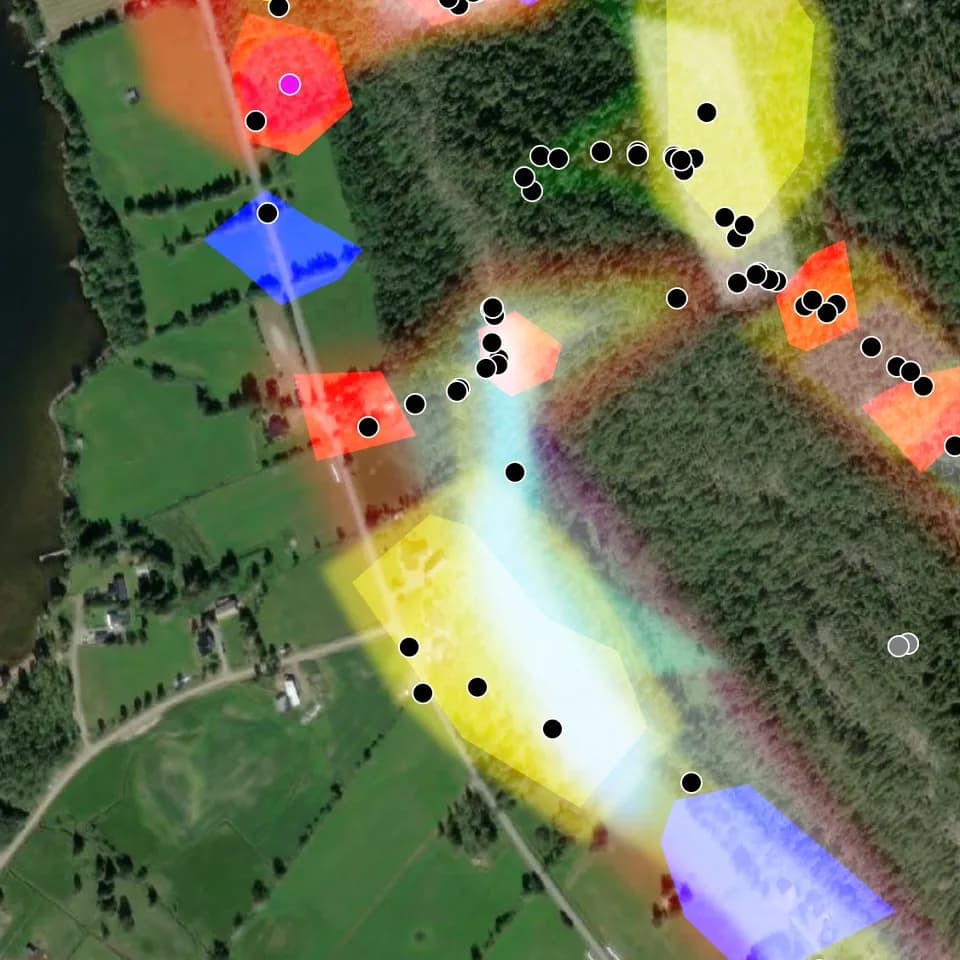
Previewing “Bergets berättelser”02:14
A simulator. Drag a virtual visitor, change the time or the incoming data, and watch every node respond live.
Add note
Riss 3 comes in too early here. Pull the zone back to the bend.
 Take Photo
A mobile app. Preview the experience where it happens, record routes as you walk, and leave notes pinned to the spot you stood on.
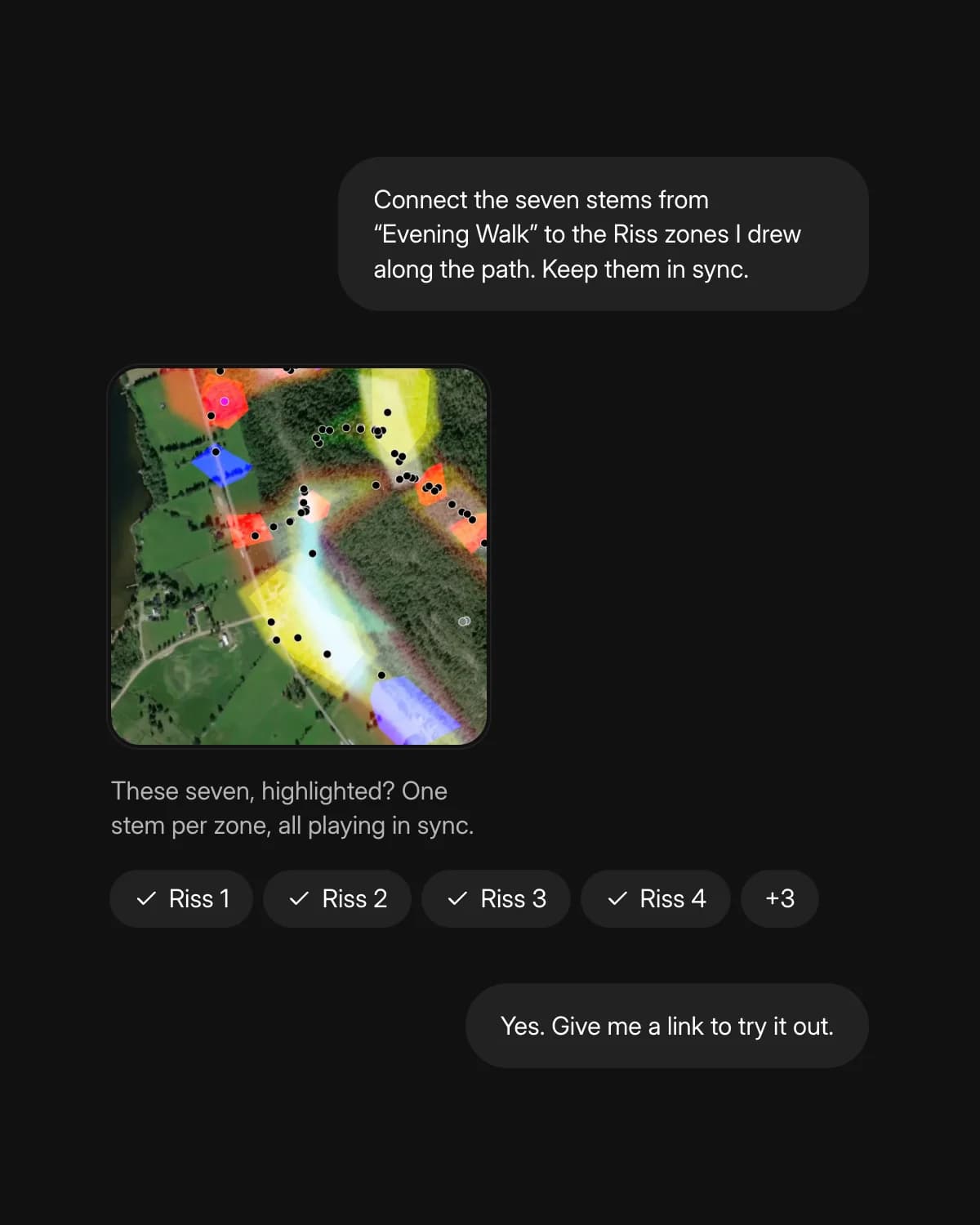
An AI layer. Connect your own AI agent and describe a change to hundreds of nodes in a sentence — the full system stays there to inspect.
A runner app. Run an experience on a computer in the room and send DMX and OSC signals to lights, installations and other systems.
Test instantly, anywhere
Move a virtual visitor through a map, change the time, trigger another visitor or alter incoming data — and immediately see and hear how the experience responds.
That makes it easy to test, tweak and iterate both on site and from the studio.
Built to keep working
Skapes has been tested in live, public-facing environments where location, connectivity, device behaviour and media playback all need to work together reliably.
The same platform is used to create, simulate and run the experience, reducing the gap between what you test and what visitors actually get.