Inside the making of Bergets berättelser
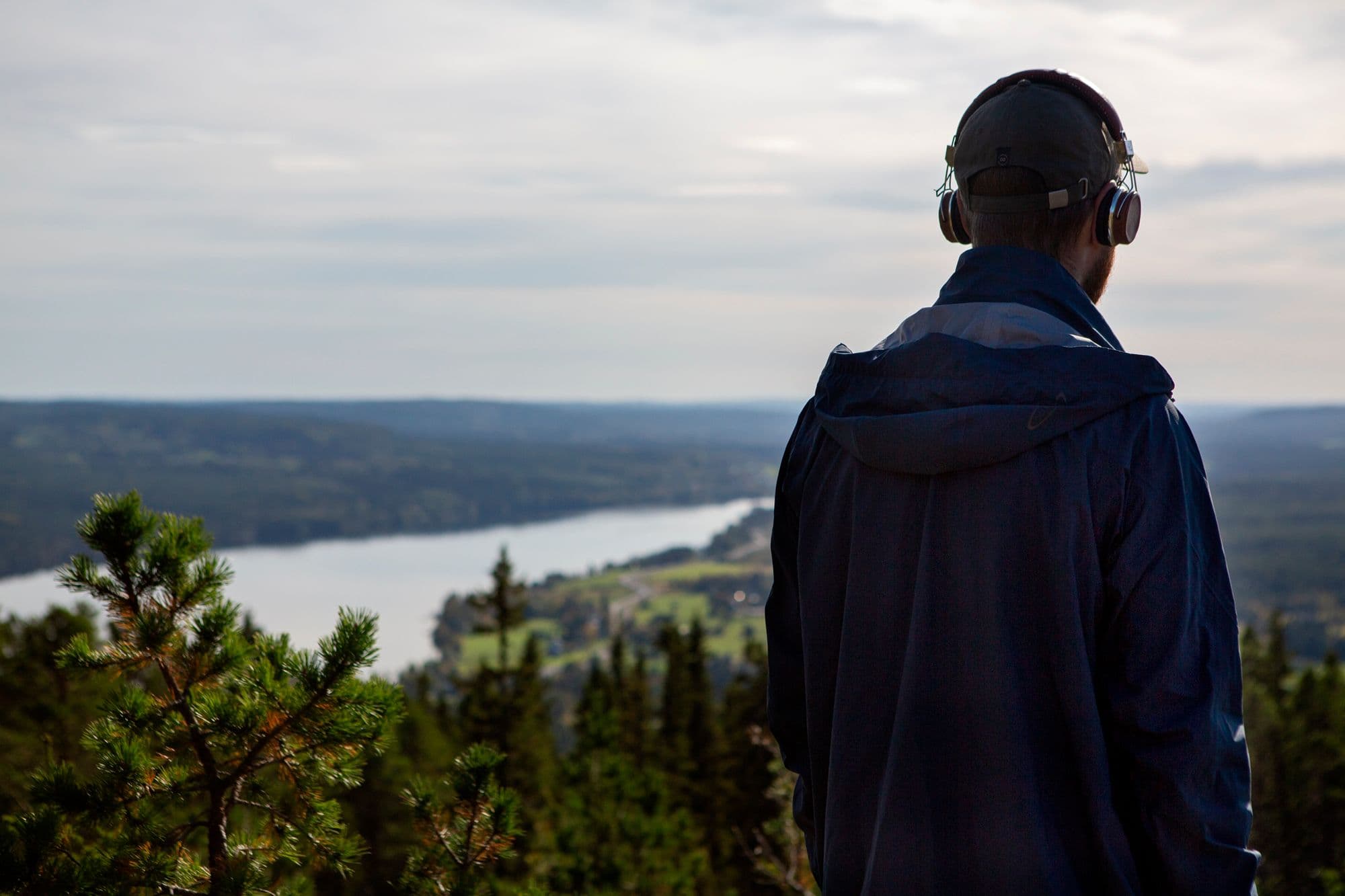
Photo: Maja Daniels for Bergets berättelser.
Through multi-layered music, poetry, and scientific insights, the work creates a living audio landscape. As you move from the sweeping vistas at the peak down into the hidden cave, you encounter voices from archaeologist and reindeer herder Ann Kristin Solsten, physical geographer Anders Olof Öhlén, and natural sciences educator Paul van den Brink — revealing where competing interests meet and urgent contemporary questions crystallize.
On-site studies
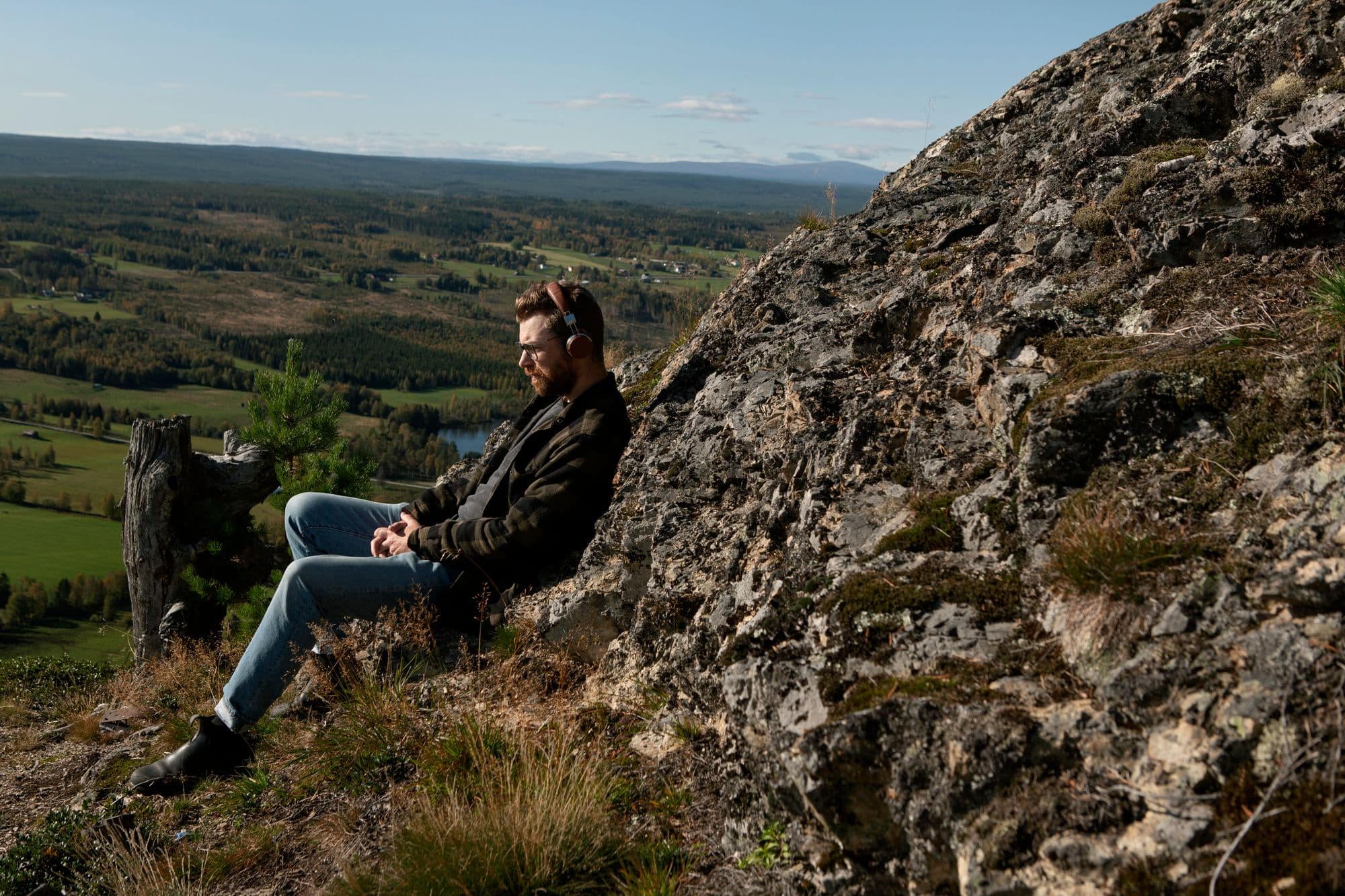
Early on, Tove and BK spent extensive time on Hoverberget, letting the mountain reveal itself. This isn't a place you can understand from maps alone. The terrain shifts between exposed ridges and sheltered forest paths. The cave system opens unexpectedly from the hillside. Each route offers different perspectives, different soundscapes, different stories waiting to be told.
Understanding these layers — where visitors would pause to catch their breath, where sight lines open to reveal distant valleys, where the landscape demands attention — became essential to shaping the narrative. The physical complexity of the place would define how the audio experience could unfold.
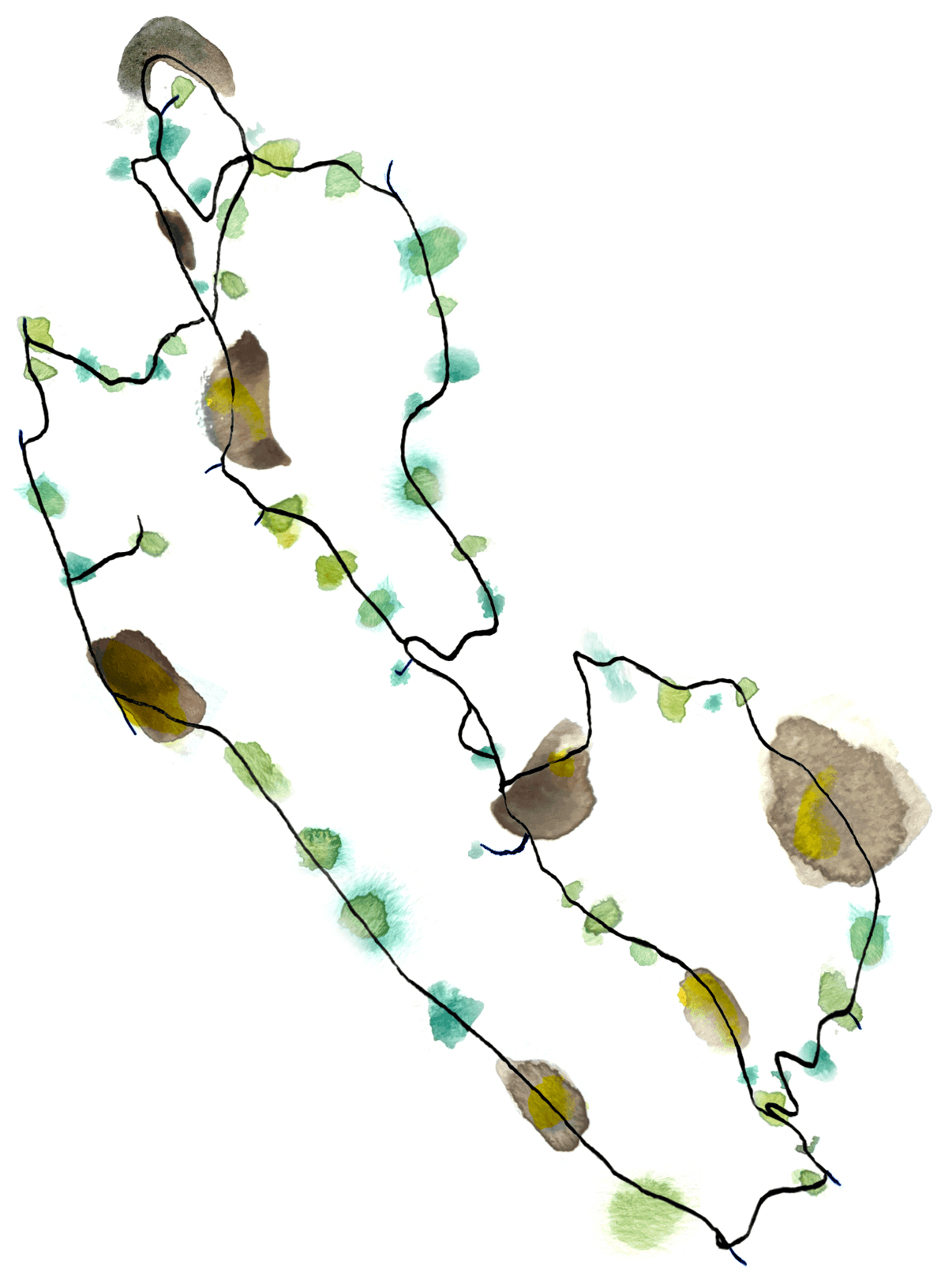
Using the mobile app, they documented everything. Routes were recorded with contextual notes: "Steep climb, visitors will be out of breath here." "View opens through birch trees — moment of discovery." "Ancient stone formation, feels timeless." Each observation became a building block, a digital map of the mountain's narrative potential that would later inform where sounds should emerge, fade, or transform.
Back to the studio
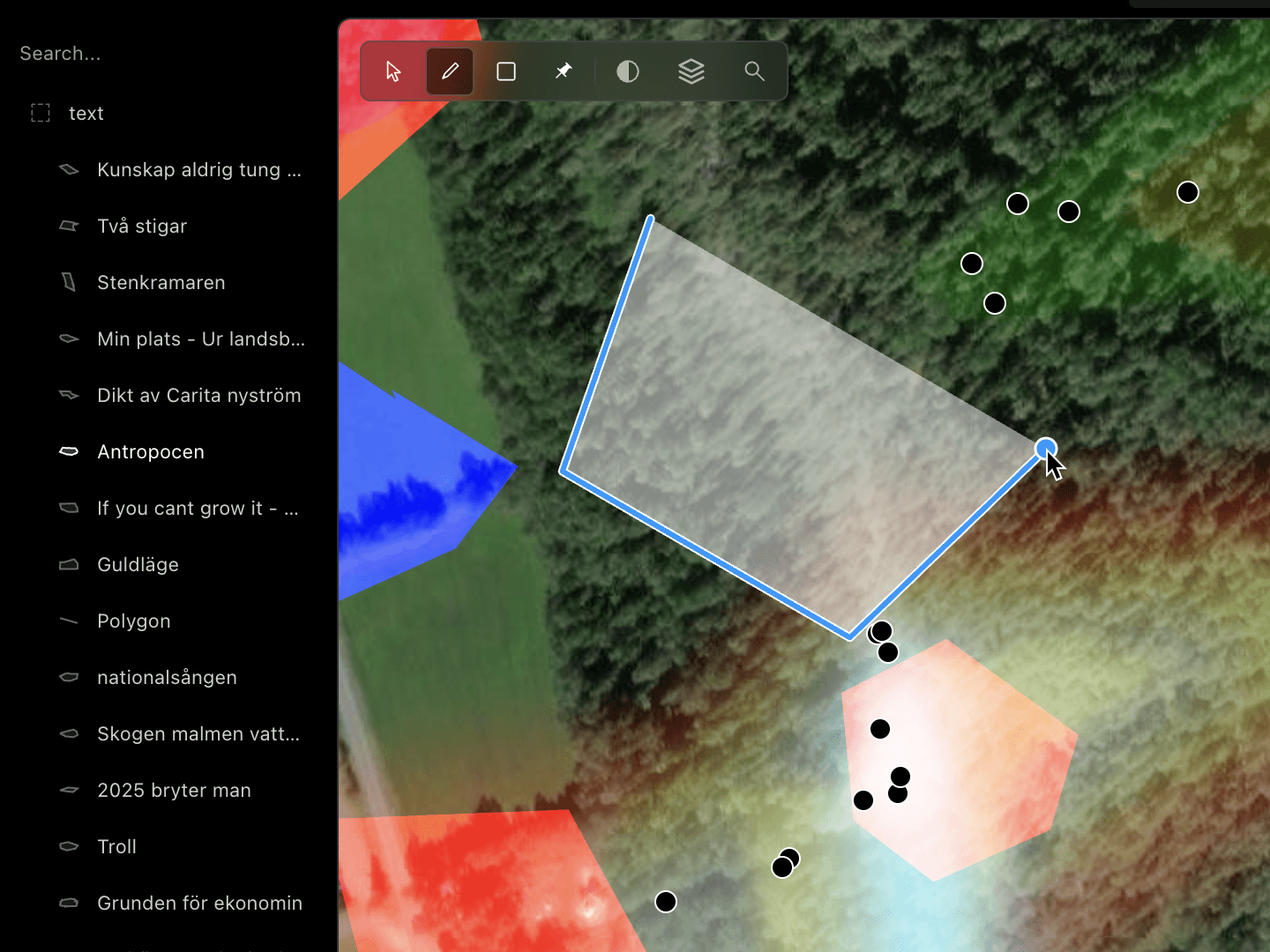
Back at the studio, the real work began. All those field recordings appeared automatically in the map workspace. Tove and BK used this visual interface to workshop the narrative — sketching audio zones directly on the map, deciding where poetry should surface, where scientific voices would anchor the experience, where BK's layered compositions would respond to visitor movement.
They could simulate walking the mountain remotely, testing how different sounds would interact, how the experience would shift as someone moved from peak to cave. Each iteration refined the logic: what triggers when, how audio layers build and dissolve, where silence matters as much as sound.

Testing on site
Then came the crucial step: returning to Hoverberget with the draft implementation. This is where theory meets reality. Walking the actual paths with headphones on, they experienced what worked and what didn't. A sound they'd carefully placed on the map felt wrong in the physical space. A transition they'd workshopped remotely needed adjustment when you were actually climbing, breathing hard, focused on your footing.
They'd pause mid-trail, make adjustments in real-time through the collaborative workspace, then walk the section again. The tools stayed out of sight while enabling rapid iteration — testing variations, fine-tuning triggers, discovering what only emerges when you're actually there in the landscape.
Some discoveries only happened through this process. A particular section of the path where wind through the pines created its own soundtrack — they adjusted the composed audio to work with it, not against it. The cave's acoustic properties changed how voices resonated. The rhythm of ascending versus descending altered how musical elements should layer and evolve.
–It's kind of magical, being able to test on-sight and adjust in real time.
The final installation emerged through countless cycles of this process. Remote design sessions adding new musical layers and refining the narrative structure. On-site testing revealing how it actually felt. Back to the studio to adjust. Return to the mountain to validate. BK's compositions evolved in response to the landscape. New voice recordings were woven in. The logic grew more sophisticated, responding not just to location but to the pace and rhythm of each visitor's unique journey.
What resulted is a soundscape that feels alive — never the same twice, always responsive, giving Hoverberget the audio experience it deserves. Technology that stays invisible while enabling something that wouldn't be possible any other way: a mountain that tells its own stories, adapted to each individual's journey.